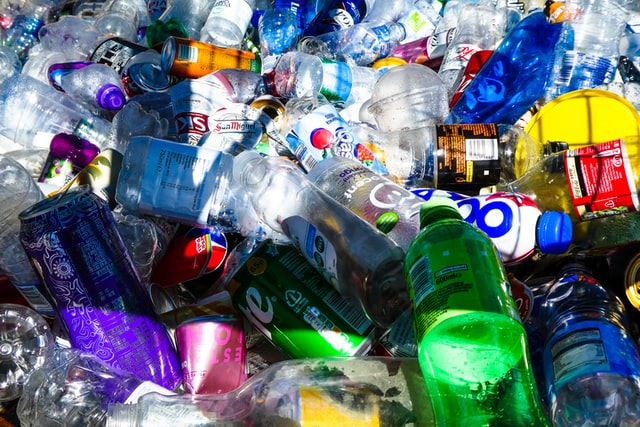
PET Recycling
At the recycling plant, the various recyclables are separated by transporting the glass, paper and metal into their own recycling streams.
After all non-plastic waste has been removed, high-value recyclable plastics such as PET are separated using automated systems or manually, sometimes both together. This is because the presence of other plastics contaminates the PET recycling process, limiting its quality for reuse, reducing efficiency and contributing to waste generation.
Compression and Transport
After PET is collected, it is compressed for ease of transport. PET has advantages over other recyclable packaging materials in that it is extremely light and can be compressed into small bales. This reduces emissions associated with transportation.
Conversion
These compressed PET bottle bales are then sent to a processing centre. The bottles are processed here so they can be converted into recycled PET ( rPET ) and ready for repackaging process.
PET bottles are separated into streams of color and then grinded into small crushed flakes.
PET can also be further recycled. This requires applying enough energy to the PET to break the bonds that hold the molecules together and break the PET into its chemical fragments. These can then be recombined into PET or even other types of plastic. However, this is more complex and resource-intensive, and PET can already be easily recycled by using more conventional methods.
When all parts of the process work properly, PET bottles are repeatedly turned into PET bottles. The technology has been tried and tested and the capacity is waiting to be used. Improving collection rates so the industry can take their bottles back is crucial to speeding up recycling and ensuring a more sustainable future for packaging.

